Kalam Means Pen. Kari Means Work.
Srikalahasti, the town this craft is named for, has practised pen Kalamkari for generations — long before it appeared on sarees. Temple priests once commissioned large painted cloths depicting the epics to hang inside the Srikalahasteeswara temple, giving pilgrims who could not read a way to follow the stories of the Ramayana and Mahabharata.
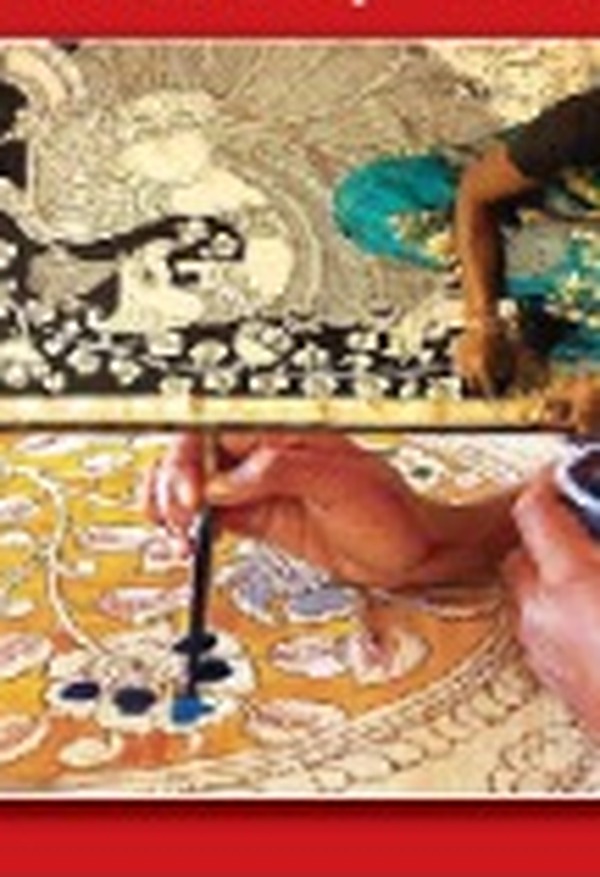
We still work the same way: no printing blocks, no screen printing, no shortcuts. Every outline is drawn freehand with a kalam — a pen whittled from a tamarind twig — and every colour comes from a plant, root or mineral rather than a chemical dye bath.
C. Sridhar
Srikalahasteeswara Kalamkari is run by C. Sridhar out of our workshop and store on Panagal Main Road, Srikalahasti — a short walk from the Srikalahasteeswara Temple that gives both the town and this craft their name.
We work directly with the artisans who draw and dye every piece, which is why we're able to sell without the markups that come from passing through multiple middlemen. If you'd like to see a piece up close before you commit, we're happy to arrange a live video call over WhatsApp.
How A Piece Is Made
Mordanting
Raw cloth is soaked in a mix of myrobalan powder and buffalo milk, which lets the natural dyes bind permanently to the fibre instead of washing out.
Hand-Drawing
The design is sketched, then outlined freehand using a kalam — a bamboo or tamarind-twig pen — dipped in a fermented jaggery-and-iron liquor that dries to black.
Natural Dyeing
Colour is built up in stages — madder root for red, indigo for blue, myrobalan and pomegranate rind for yellow — with a wash and dry between each dye bath.
Sun-Drying & Finishing
Finished cloth is laid out to dry and bleach gently in open sunlight, then inspected by hand before it's folded and sent to the store.